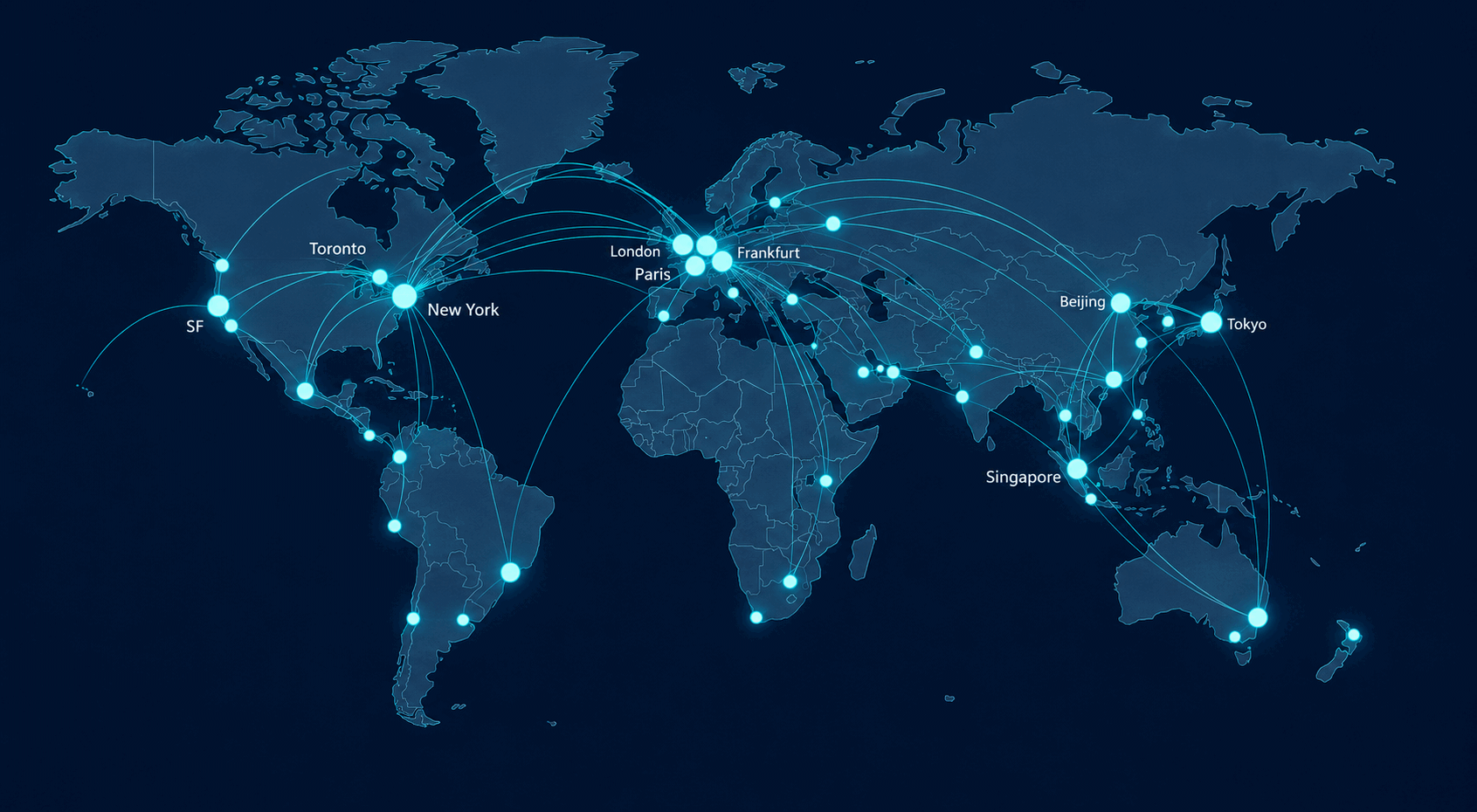
China PIPL Guide
This guide explains how China PIPL affects global businesses, with clear insights into compliance, risk, and operational strategy. It reflects the 2026 enforcement landscape and offers practical steps for legal, technology, and business teams.
Technology-law decisions involving China PIPL Guide can require navigating overlapping AI, privacy, cybersecurity, data, platform and sector rules. This page helps identify the principal frameworks, practical obligations and issues that should be verified before acting.
Author: Dr. Rahul Dev: PhD Data Scientist, Technology Law & Patent Attorney, and AI Educator with 20+ years advising global CEOs and CXOs on tech, business, and legal innovation.
Connect on LinkedIn or explore more here.
Dr. Rahul Dev brings over two decades of hands-on experience advising multinational companies on data governance, cross-border technology transactions, and regulatory compliance, including direct implementation of China PIPL requirements in market entry strategies, often integrating patent strategy into compliance architecture. As an international patent attorney and technology business lawyer licensed across APAC, the US, and Europe, he has structured compliant data frameworks aligned with GDPR, China PIPL, and emerging AI regulations, supported by deep technology law guidance across jurisdictions. His work has been featured in Bloomberg and CNBC-TV18, and includes guiding cross-border operations with zero regulatory breaches under complex privacy regimes, often backed by advanced regulatory intelligence research. This China PIPL guide reflects the current 2026 enforcement landscape, including the January 1, 2026 Measures enabling certified cross-border data transfers through approved third-party mechanisms, alongside structured legal directory research to benchmark compliance approaches.
For businesses operating in or targeting China, China PIPL is no longer a theoretical compliance issue but a live regulatory risk tied to consent design, data localization thresholds, and lawful international data flows. Missteps in personal information processing or cross-border transfers can trigger fines up to five percent of annual revenue, operational suspension, and personal liability for executives, making practical AI training and awareness increasingly essential.
This article explains China PIPL in plain English, covering consent requirements, sensitive data handling, localization mandates, and the three lawful transfer pathways, alongside practical compliance tools used by global organizations and insights from blockchain legal analysis where decentralized systems intersect with regulated data flows. Readers will gain a clear, operational understanding of how to assess applicability, conduct PI Protection Impact Assessments, implement compliant consent flows, choose between certification, standard contracts, or security assessments, and build defensible, audit-ready China PIPL compliance programs in 2026 and beyond, with actionable steps tailored for legal, tech, and business teams.
Penalties under China PIPL can reach 50 million RMB or 5 percent of annual revenue. That number stops most executives mid-sentence. But the real exposure is not the fine itself. It is the business cessation order, the personal liability for managers, and the market access you lose while competitors move forward, which is why firms increasingly rely on technology consulting to align compliance with operational systems.
China's Personal Information Protection Law took effect on November 1, 2021 and is a central national framework governing personal-information processing in China. For any company processing Chinese user data, whether based in Shanghai or San Francisco, PIPL compliance is no longer optional. The January 1, 2026 certification pathway update changes the tactical options, but the strategic pressure only intensifies, particularly as executives pursue AI adoption strategy aligned with regulatory expectations.
The real exposure is not the fine itself—it is the market access you lose while competitors move forward.
What is China PIPL and Why It Matters Now
China PIPL is the country's first national-level legislation dedicated solely to personal information protection. It operates alongside the Cybersecurity Law and Data Security Law to create a regulatory triad that foreign businesses cannot ignore. Unlike GDPR, PIPL includes mandatory data localization for large-scale processors and explicit national security mandates that reshape how companies architect their data flows.
If your company offers products to Chinese residents, PIPL governs your operations regardless of server location.
Personal Information Processing Under China PIPL
Processing personal information under PIPL requires adherence to principles that sound familiar but carry sharper teeth. Legality, necessity, good faith, purpose limitation, and data minimization form the foundation. Transparency and accountability are not suggestions.
Businesses must inform individuals about the handler's identity, the processing purpose, data categories, retention periods, and how rights can be exercised. Consent must be voluntary, explicit, and documented after full disclosure. Individuals can withdraw consent at any time, and that withdrawal must be as easy as the original grant. For minors under 14, parental consent is mandatory. Separate consent applies to sensitive personal information such as biometrics, health data, and financial records. Chambers and Partners notes that separate consent for cross-border transfers has become a deal-breaker in vendor due diligence across finance and healthcare sectors.
Consent must be voluntary, explicit, and documented—and withdrawal must be as easy as the original grant.
Data Localization in China and Cross-Border Transfer Rules
PIPL requires certain critical information infrastructure operators and personal-information processors meeting thresholds prescribed by the national cyberspace authority to store covered personal information domestically, subject to the applicable rules for cross-border provision. The relevant threshold and transfer mechanism should be checked against current CAC measures rather than assumed from a single universal rule.
Three legal pathways exist for cross-border transfers under Article 38. The CAC Security Assessment applies to CIIOs and large-scale processors. Standard Contractual Clauses work for non-CIIOs transferring less than one million non-sensitive records. The 2026 update adds a third-party certification pathway, valid for three years, that gives regular data exporters a streamlined alternative. Exemptions exist for contract performance, emergency situations, and annual transfers under 100,000 non-sensitive records. Before any transfer, a Personal Information Protection Impact Assessment is mandatory, and results must be retained for at least three years.
Having mapped the landscape, here is how I have guided clients through this directly:
I have spent 20+ years advising boards and founders where international patent law, technology business law, and AI strategy intersect, and China PIPL sits squarely in that overlap. As a PhD in Data Science and an international patent attorney, I translate the Chinese data privacy law into plain business decisions: what personal information processing under China PIPL is permitted, when consent fails, where data localization in China changes architecture, and how regulatory risk affects IP monetization and market entry.
In one cross-border SaaS expansion, I advised a product team moving analytics, customer support, and model-training workflows involving Chinese user data across APAC, the US, and Europe. I reworked the data flow against China PIPL compliance rules, separated sensitive-data handling, and tied transfer decisions to patent-sensitive source code and trade-secret controls so the company could protect its AI portfolio while reducing unlawful export exposure. The result was market entry across 3 jurisdictions without a remediation order, a 30% improvement in internal process efficiency, and a cleaner path for AI Regulatory Compliance Navigation tied to commercialization.
What many executives miss in 2025-2026 is that privacy, AI governance, and IP are no longer separate workstreams. China's January 1, 2026 certification pathway for cross-border transfers adds flexibility, but it also raises the standard for governance evidence, especially as regulators scrutinize finance, healthcare, tech, and e-commerce more aggressively.
Privacy, AI governance, and IP are no longer separate workstreams—they determine market access together.
PIPL Compliance Checklist for Business Operations
Compliance under PIPL requires systematic preparation that many companies underestimate. Data mapping of all personal information processing activities comes first. Classified management protocols, internal policies, and operational procedures must follow. Technical security measures including encryption and access controls are mandatory, not aspirational.
Emergency response plans for breaches need testing before incidents occur. A designated Personal Information Protection Officer is required for large-scale processors. PIPIA documentation before high-risk activities protects against enforcement actions. Regular compliance audits and timely breach notifications to authorities and individuals complete the operational framework. Exterro and Securiti.ai both offer compliance tools that automate consent workflows, impact assessments, and cross-border monitoring. For companies comparing frameworks, GDPR allows multiple legal bases including legitimate interest, while PIPL relies primarily on consent with separate consent requirements for sensitive data and cross-border transfers.
Preparing for 2026 Enforcement Trends
China's 2026 enforcement priorities target finance, healthcare, technology, and e-commerce sectors with increased scrutiny on foreign business operations. The certification pathway effective January 1, 2026 offers flexibility for regular data exporters, but early preparation is essential. Waiting until enforcement actions begin means competing from a weakened position.
Three priorities should guide your next steps. First, complete data mapping across all processing activities involving Chinese user data. Second, evaluate which cross-border transfer pathway fits your operational profile. Third, establish contract discipline with overseas recipients before regulatory pressure forces reactive measures. Understanding China PIPL for businesses means treating compliance as infrastructure, not overhead.
The companies moving fastest in 2025-2026 are integrating PIPL compliance with AI governance and IP protection strategy. That combination protects market access and enterprise value simultaneously. If you want a clear assessment of where your data flows create exposure, book a consultation with Dr. Rahul Dev to map your compliance path before enforcement priorities find you first.
Frequently Asked Questions
What is China PIPL?
What is personal information processing under PIPL?
What is consent management under PIPL?
What is data localization in China?
What is China PIPL cross-border data transfer?
Editorial note: TechCorpLegal summarizes public legal, regulatory, and technology materials in plain English. This page is informational only and is not legal advice. Readers should consult qualified counsel before acting on legal or compliance questions. This topic is also tracked in TechCorpLegal's LexOS intelligence system, which cross-references laws, jurisdictions, and legal tech tools. Have a question about this? Get in touch with Dr. Rahul Dev.