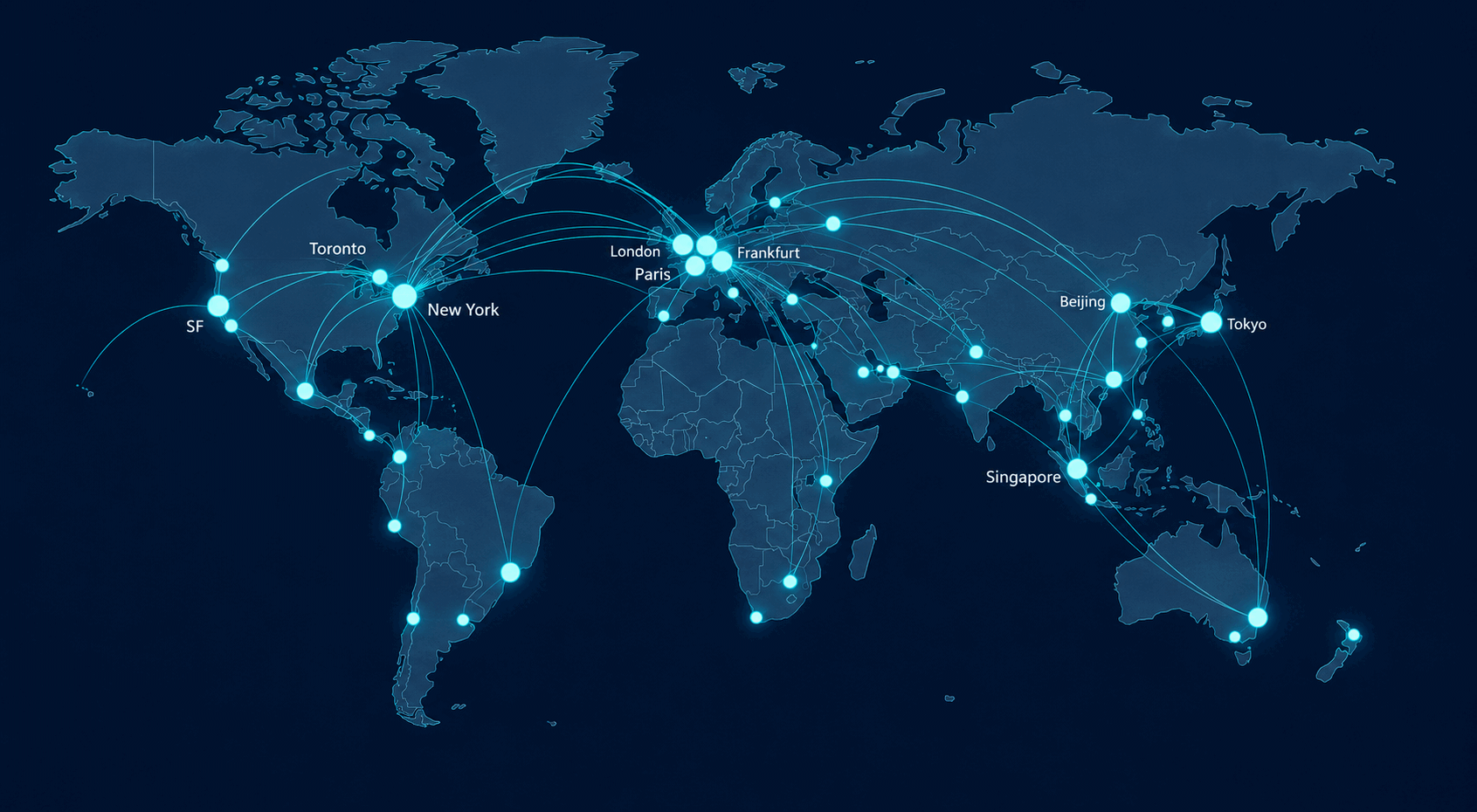
Japan Technology Law
Research status: Review material legal, regulatory and product claims against the linked primary or first-party sources before relying on them for a specific decision.
Japan’s approach to regulating AI, data, and digital markets is reshaping global compliance strategies. This article explains the structure, risks, and opportunities within Japan technology law as of 2026.
Author: Dr. Rahul Dev: PhD Data Scientist, Technology Law & Patent Attorney, and AI Educator with 20+ years advising global CEOs and CXOs on tech, business, and legal innovation.
Connect on LinkedIn or explore more here.
Dr. Rahul Dev brings over two decades of hands-on experience advising technology companies on international patent law and cross-border technology business law, including market entry and compliance strategies in Japan’s regulated digital sectors within Japan technology law, often working on patent strategy and cross-border innovation protection. He has guided AI, fintech, and platform operators through real-world implementations of Japan technology law during product launches and scaling phases.
A licensed practitioner across APAC, the United States, and Europe, Dr. Dev combines patent strategy with data governance, having delivered hundreds of compliant opinions under GDPR, the EU AI Act, and comparable Asian frameworks, informing practical application of Japan technology law alongside deep technology law guidance. His PhD in Data Science and work on AI/ML systems ground his legal analysis in technical realities, including artificial intelligence in Japan.
His work has been featured in Bloomberg and CNBC-TV18, and he has led cross-border projects achieving com/">IP research and regulatory intelligence.
This introduction reflects current 2026 developments, including the full effect of Japan’s AI Promotion Act and the 2026 PPC bill to relax certain APPI consent requirements for AI training data, ensuring advice aligned with present enforcement and guidance, including the latest Japan technology law updates and informed by global legal service comparison platforms.
For businesses entering or operating in Japan, the stakes are immediate: a pro-innovation, non-punitive AI regime, new platform transparency rules, sectoral cybersecurity duties, and fintech competition measures reshape risk, disclosure, and data use under Japan technology law. This article explains how Japan technology law fits together—AI governance, APPI privacy, cybersecurity, fintech, and platform regulation—and what practical steps companies must take to remain compliant while advancing AI adoption and international growth today effectively, supported by AI learning resources.
Japan enacted comprehensive AI legislation without a single penalty clause. That fact alone makes its 2025 regulatory framework unlike anything else in the world. For executives evaluating market entry or AI deployment in Japan, this distinction reshapes every compliance calculation within Japan technology law.
The AI Promotion Act, fully effective September 1, 2025, establishes Japan as the second major APAC economy with formal AI governance. But unlike the EU AI Act's fine-heavy approach, Japan built its framework on cooperation, transparency, and reputational accountability. For global businesses, this creates both opportunity and a different kind of risk that requires strategic navigation in the evolving technology laws in Japan, similar to challenges seen in blockchain legal analysis.
How Does Japan Regulate AI and Digital Policies?
Japan's regulatory philosophy starts with a question most frameworks ignore: how do we encourage adoption while managing risk? The AI Promotion Act answers by creating the AI Strategic Headquarters, chaired by the Prime Minister, to coordinate national policy through the Basic AI Plan. This plan prioritizes "trustworthy AI" through four pillars: Adopt, Create, Enhance Trustworthiness, and Collaborate.
Japan built its AI framework on cooperation and transparency, not penalties, creating opportunity alongside a different kind of risk.
The enforcement model relies on government guidance, public disclosure of bad actors, and investigation cooperation rather than monetary sanctions. Microsoft and Google, both expanding AI operations in Japan, must comply with voluntary governance frameworks while maintaining transparency disclosures. Refusal to cooperate carries no direct fine, but administrative action remains possible when AI misuse violates existing rights under personal information or copyright laws, reflecting Japan AI governance and often requiring technology consulting support.
Japan Data Privacy Laws and AI Development
The Act on the Protection of Personal Information remains Japan's privacy foundation, though it contains no specific AI provisions. That changes with the proposed 2026 APPI amendment, which removes consent requirements for third-party data sharing when used solely for statistical or AI development purposes under minimal-risk conditions. The Personal Information Protection Commission submitted this bill in April 2026, signaling a regulatory priority on facilitating AI training data access within Japan data privacy laws.
The 2026 APPI amendment removes consent requirements for AI training data, fundamentally changing data strategy for every enterprise.
Privacy governance remains sector-based, with companies regulated by their supervising government institution rather than a central AI authority. For enterprises like OpenAI seeking to expand training data operations, this creates a fragmented compliance landscape requiring relationship management across multiple regulatory bodies. The AI Utilization Guidelines emphasize stakeholder involvement and agile risk response, making compliance a continuous process rather than a checkbox exercise and raising cybersecurity challenges in Japan, often addressed through AI adoption strategy.
Understanding Japan Technology Law and Platform Competition
The 2025 Smartphone Software Competition Promotion Act makes Japan the fourth global region to target Big Tech market power with complementary competition rules. Apple and Google face new obligations around app store conduct, distribution practices, and bargaining power with developers. Paired with the Digital Platform Transparency Act enforced in 2026, large online malls, app stores, and digital advertising platforms must meet transparency and fairness obligations toward business users under Japanese technology regulations.
Japan joined the EU, UK, and Germany in targeting Big Tech platform power, directly affecting app distribution and fintech innovation.
For fintech innovation in Japan, this regulatory alignment creates predictable rules but also new compliance burdens tied to Japan fintech regulations. AI-based credit assessments and autonomous driving systems now operate under sector-tailored frameworks that emphasize transparency, fairness, and risk mitigation. The October 2025 U.S.-Japan Technology Prosperity Deal reinforces cross-border cooperation in healthcare, biotechnology, and shared regulatory principles within the Japan regulatory environment.
Having mapped the landscape, here is how I have guided clients through this directly:
I have spent 20+ years advising boards and founders at the intersection of international patent law, technology business law, and AI strategy, and that lens is essential to understanding Japan technology law today. In my work across APAC, the US, and Europe, I assess not only legal text, but how privacy, IP, product design, and market entry decisions interact under fast-moving Japanese technology regulations and the Japan legal framework for technology.
I have also delivered
A non-punitive model still creates real regulatory risk through disclosure, investigations, and rights-based enforcement.
What many executives miss in the latest Japan technology law updates is that 2025-2026 policy is not simply about compliance checklists. Japan's approach signals a broader technology governance trend: innovation-friendly regulation paired with reputational enforcement, sector supervision, and increasing scrutiny of data access, AI outputs, and IP ownership.
Implications of Japan Technology Law for Global Markets
Japan's flexible, non-punitive model may encourage AI adoption in fintech and digital services, creating competitive advantage against the EU's stricter penalty regime. The AI Act's broad definition covers technologies substituting human cognitive abilities including reasoning and judgment, ensuring sector-wide applicability across industries.
Japan's innovation-friendly model may encourage AI adoption where the EU's penalty regime creates hesitation.
Regulatory compliance in Japan now requires voluntary governance frameworks, transparency disclosures, and cooperation with government investigations. The absence of direct fines does not eliminate risk. Administrative actions for rights violations, reputational damage from public disclosure, and investigation burdens create material exposure for unprepared organizations navigating Japan cybersecurity regulations and broader compliance expectations.
The digital transformation in Japan accelerates under policies encouraging AI adoption in financial services while maintaining sector-specific flexibility. For enterprises planning 2025-2026 market entry, three priorities emerge: align governance frameworks with the AI Utilization Guidelines, prepare for the 2026 APPI amendments affecting training data strategy, and build relationships with sector regulators before launch.
Japan technology law rewards proactive engagement over reactive compliance. The regulatory environment favors companies that demonstrate trustworthy AI practices, maintain transparency, and cooperate with government guidance. This week, audit your current AI governance documentation against the four pillars of Japan's Basic AI Plan. Then book a consultation with Dr. Rahul Dev to develop a cross-border compliance architecture that positions your organization for competitive advantage in Japan's innovation-friendly regulatory landscape.
Frequently Asked Questions
What is Japan's Technology Law Overview?
What is the Scope of Japan's Privacy Laws?
Japan's privacy laws protect personal information from being misused. They regulate how businesses collect and manage data, ensuring individuals' rights. In a 2025 update, the Personal Information Protection Commission fined a tech firm for improper data handling, reported by The Japan Times. This shows the reach and enforcement of Japan's data privacy laws, ensuring the public's data is safe while empowering businesses to innovate responsibly.
What is Japan AI Governance?
What is Japan Cybersecurity Regulation?
Japan cybersecurity regulation aims to protect digital infrastructure from cyber threats. These rules require companies to secure their systems, much like a security guard for a vault. In 2026, NEC Corporation boosted its cybersecurity measures following a regulation update, reported by Japan News. Following Japan's cybersecurity regulations ensures safety against digital attacks and secures necessary trust in digital services within the evolving Japan regulatory environment.
What is Japan's Fintech Regulations?
Japan's fintech regulations manage financial technologies to ensure innovation while protecting users. These rules are like guidelines for safely using this digital wave. In 2025, Rakuten Bank adjusted its platform to comply with new fintech regulations, as reported by Bloomberg. The aim is to balance growth and security, showing how fintech regulations in Japan impact global markets by setting trust and integrity as priorities in financial services.
Editorial note: TechCorpLegal summarizes public legal, regulatory, and technology materials in plain English. This page is informational only and is not legal advice. Readers should consult qualified counsel before acting on legal or compliance questions. This topic is also tracked in TechCorpLegal's LexOS intelligence system, which cross-references laws, jurisdictions, and legal tech tools. Have a question about this? Get in touch with Dr. Rahul Dev.