Generative AI in Law
Research status: Review material legal, regulatory and product claims against the linked primary or first-party sources before relying on them for a specific decision.
Generative AI in law is transforming how legal professionals research, draft, and ensure compliance. This article explains real-world adoption, risks like hallucinations, and how to build governed, audit-ready workflows.
Author: Dr. Rahul Dev: PhD Data Scientist, Technology Law & Patent Attorney, and AI Educator with 20+ years advising global CEOs and CXOs on tech, business, and legal innovation.
Connect on LinkedIn or explore more here.
Dr. Rahul Dev brings two decades of hands-on experience advising on international patent law and technology business law, where generative AI in law is already embedded in drafting, research, and cross-border compliance, including work on patent strategy and technology transactions. He has overseen real-world deployments of generative AI in law across contract analysis, IP strategy, and regulatory filings, balancing speed with accuracy and duty to courts.
A PhD in Data Science, he is licensed across APAC, the US, and Europe, advising on GDPR, the EU AI Act, and multi-jurisdictional professional responsibility rules through technology law guidance. His work includes
Generative AI in law can draft briefs, summarize authorities, and predict outcomes with high accuracy, but hallucinations and fabricated citations remain a material risk. Regulations such as ABA Formal Opinion 512 and California Bar guidance require competence, supervision, and strict review of all AI-generated work. For firms, founders, and in-house counsel, adopting generative AI in law is no longer optional but tightly governed and auditable. Readers will learn how generative AI in law is used, where it fails, how to control hallucination risk, and how to design compliant workflows for 2026 and beyond.
Every single one of the 40 largest law firms in America now uses legal-specific AI tools as part of generative AI in law. That is not a prediction; it is the 2025 Bloomberg Law survey reality. The question is no longer whether generative AI in law will reshape your practice. The question is whether your firm will control it or be controlled by it, especially when relying on legal research systems enhanced by AI.
How Is Generative AI Used in Law Today
The question is no longer whether AI will reshape legal practice but whether your firm will control it.
Risks of AI Hallucinations in Legal Research
Hallucination risk is not theoretical. AI legal tools can confidently generate citations, quotes, and analysis that sound authoritative but have no basis in actual law, highlighting what are the risks of AI in legal research. Multiple judges have issued protocols requiring certification that AI was not used to draft filings without human accuracy verification. Texas and New York district courts implemented these requirements in 2023, and the trend has only expanded. Lawyers now cite bias, transparency, pricing models, and data security alongside hallucination as primary adoption challenges tied to AI ethics in legal industry and emerging legal technologies, often addressed through AI education.
AI legal tools can confidently generate citations that sound authoritative but have no basis in actual law.
How to Mitigate AI Hallucination in Law
ABA Formal Opinion 512, issued July 2024, now mandates ongoing competence in AI use and how to mitigate AI hallucination in law. Attorneys must understand both capabilities and limitations of generative AI tools. They cannot rely on boilerplate consent and must ensure clients provide informed consent for confidential data use. California Bar's 2025 Practical Guidance became the first regulatory body to sanction AI use in law, covering confidentiality, competence, supervision, and candor to tribunals as part of AI governance in law.
The billing rules reflect this shift. Lawyers may charge for actual time spent crafting prompts or reviewing outputs. They cannot bill hourly for time saved by AI. All AI outputs must be reviewed for accuracy, especially citations and legal analysis, to comply with Rule 3.3. The Florida Supreme Court has updated its rules to require AI certification in filings and reinforce how does AI handle legal compliance in practice.
Lawyers may charge for time spent reviewing AI outputs but cannot bill for time that AI saved them.
Having mapped the landscape, here is how I have guided clients through this directly:
I have spent 20+ years working where international patent law, technology business law, and AI strategy meet, and that lens matters when explaining generative AI in law. As an international patent attorney with a PhD in Data Science, I assess not only what LLMs can do in AI in legal drafting and AI in legal research, but also where hallucination risk, cross-border compliance, and IP exposure can quietly erode enterprise value, including work tied to blockchain legal analysis.
I have also seen how AI legal tools affect IP-heavy businesses when legal automation moves from experimentation to production. While delivering The business result was clear: faster opinion workflows and smoother market entry, but only because every AI-assisted research step was checked against source law, disclosure obligations, and monetization strategy for the underlying technology.
Benefits of Generative AI in Legal Drafting
The productivity case is undeniable but human oversight in legal AI remains completely non-negotiable.
Generative AI in Legal Compliance and Governance
What many executives miss in 2025-2026 is that adoption is no longer the headline. Governance is, especially in generative AI in law. Large-firm adoption of legal-specific AI tools has become universal. Regulators are tightening expectations around competence and confidentiality. Courts increasingly expect certification that human experts verified AI-assisted filings. The firms winning are those treating AI governance as infrastructure, not afterthought.
AI patent filings, cross-border data restrictions, and model-governance rules are reshaping how companies protect invention, manage legal risk, and commercialize AI assets internationally. This is why using AI for legal research and compliance must align with AI governance frameworks. C-suite leaders who want AI-driven legal research and drafting to create durable advantage should prioritize human verification, jurisdiction-specific governance, and IP protection before scale.
The firms winning are those treating AI governance as infrastructure, not an afterthought.
The trajectory for generative AI in law through 2026 is clear. Universal adoption at large firms will cascade to midsize and boutique practices. Regulatory frameworks will tighten further. Hallucination mitigation will become standard practice, not competitive advantage. The winners will be firms that build verification protocols, train their teams on competent AI use, and integrate governance from day one while advancing artificial intelligence in legal education.
Your action this week: audit every AI tool your legal team currently uses against ABA Opinion 512 requirements and California Bar guidance. If you want a structured approach to AI legal tools that balances productivity with compliance, book a consultation with Dr. Rahul Dev to map your firm's path forward.
Frequently Asked Questions
What is a Large Language Model (LLM) in legal work?
What is the risk of AI hallucinations in legal research?
AI hallucinations in legal research are outputs that state inaccurate or unsupported information, including citations to authorities that do not exist or do not support the proposition stated. Legal teams should verify citations, quotations, dates, jurisdiction and source authority before relying on AI-generated research.
What is the role of generative AI in legal drafting?
What is generative AI's impact on legal compliance and governance?
What is AI governance in law?
AI governance in legal work establishes ownership, permitted uses, review requirements, data controls, escalation paths and monitoring for AI-enabled workflows. Effective governance should be connected to the actual system and legal process rather than rely on a fictional example or generic ethics statement.
Editorial note: TechCorpLegal summarizes public legal, regulatory, and technology materials in plain English. This page is informational only and is not legal advice. Readers should consult qualified counsel before acting on legal or compliance questions. This topic is also tracked in TechCorpLegal's LexOS intelligence system, which cross-references laws, jurisdictions, and legal tech tools. Have a question about this? Get in touch with Dr. Rahul Dev.
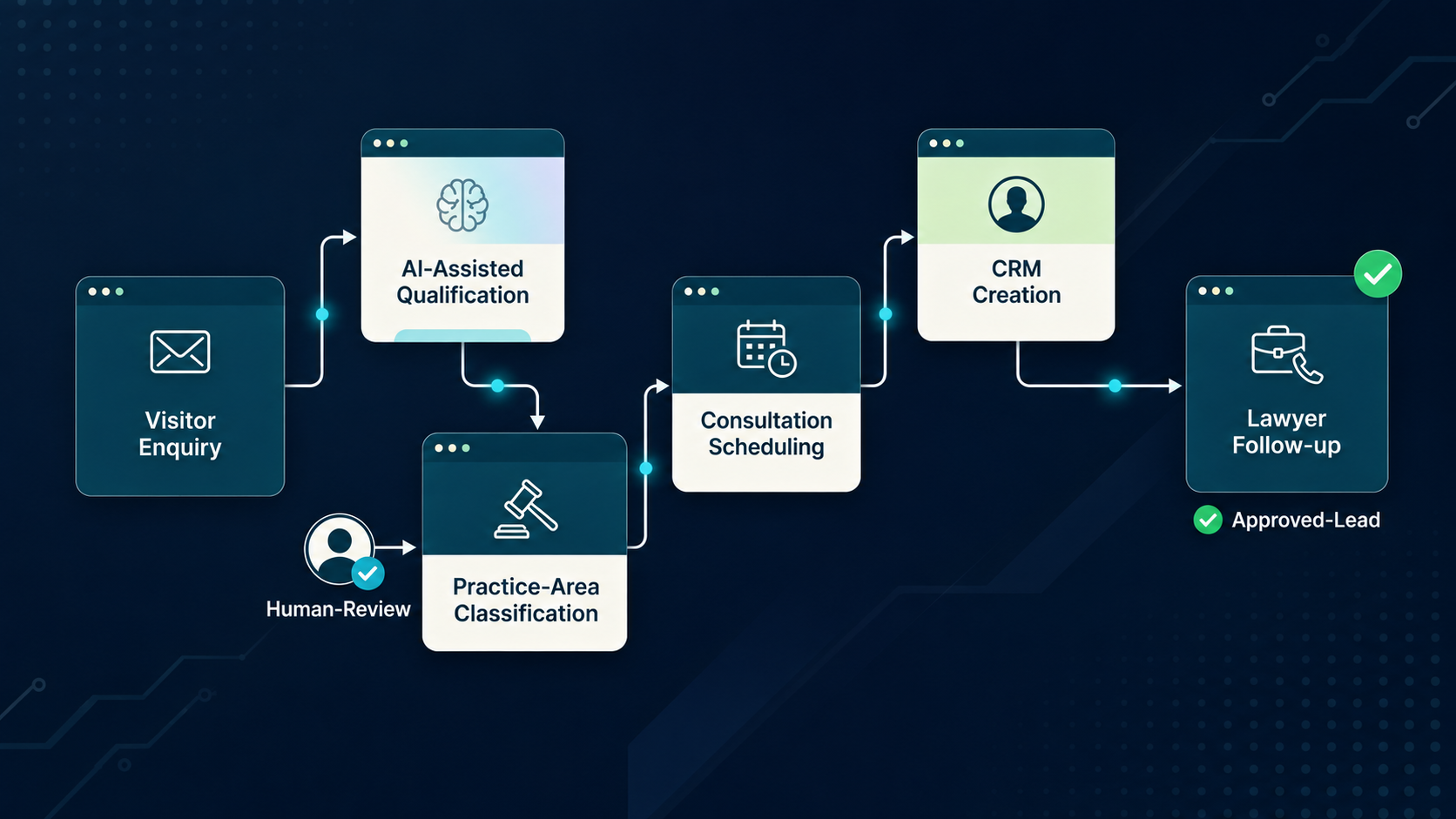
Enterprise legal AI implementation resources
Continue from this research into practical implementation, governance, workflow, vendor and measurement guidance.
For related decision context, see AI law radar.
For multi-step AI agents and the controls they require, see Agentic AI for Legal Departments: Use Cases, Governance and Implementation.
For workflow-specific GenAI use cases, risks and deployment controls, see Generative AI for Legal Departments: Use Cases, Risks and Deployment.