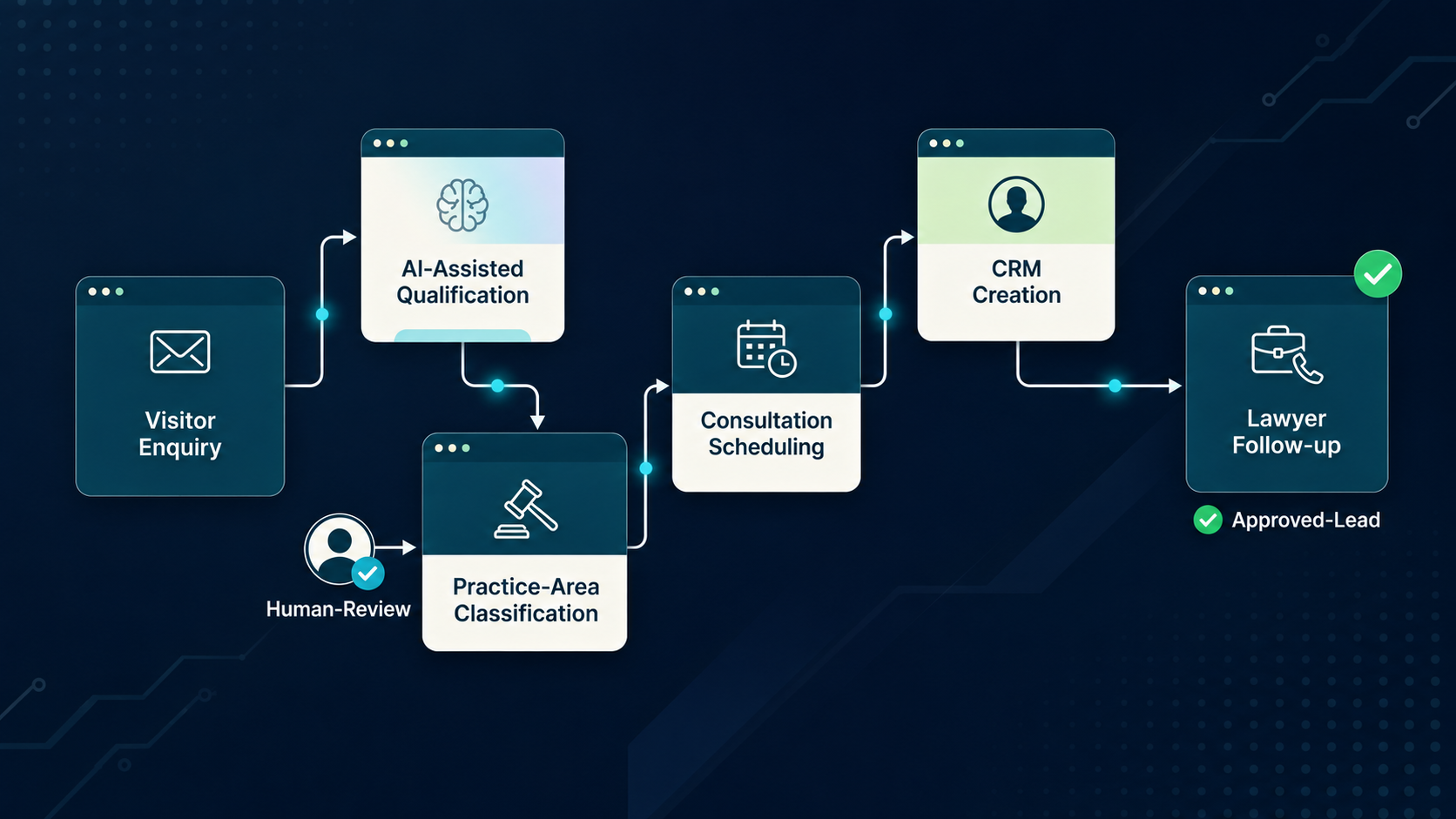
Agentic AI differs from a conventional legal chatbot because an agent may plan a sequence of steps, call tools, retrieve data and take actions. For legal departments, the governance question therefore shifts from reviewing generated text to controlling permissions, autonomy, tool access, approvals, logging, monitoring and stop conditions.
Agentic AI versus chatbot or GenAI assistant
A conventional generative AI assistant primarily responds to prompts with text or analysis. An agentic system may decompose a goal into steps, choose tools, retrieve information, update records or trigger external actions. The boundary is not always sharp, but action-taking capability changes the control model because an incorrect output can become an incorrect system action.
Legal departments should therefore define the agent by its permissions and workflow, not by marketing terminology. A system that can search internal documents but cannot change records presents a different risk profile from one that can send messages, create tasks, alter contract data or invoke downstream services. Governance should follow actual capabilities.
Legal-department use cases
Potential legal use cases include intake triage, matter preparation, research orchestration, contract workflow support, knowledge tasks and recurring compliance processes. The strongest candidates tend to have clear objectives, bounded tools and observable outputs. Tasks involving novel legal judgment or irreversible external actions require much stronger controls.
The department should avoid jumping from an assistant use case to full action autonomy. A staged design may first generate a proposed plan, then require human approval before tool execution, and only later automate low-consequence steps if evidence supports it. This creates learning without assuming that more autonomy is always better.
Autonomy boundaries and permissions
Agent permissions should reflect least privilege. The system should access only the data, tools and actions required for the approved workflow. Read access, write access, external communication and administrative privileges should be considered separately because each changes potential impact.
Boundaries should also cover goals and stop conditions. An agent should not be allowed to expand its task indefinitely or interpret an ambiguous objective as permission to use unrelated systems. Clear scope, time, transaction or action limits can reduce the chance that an unexpected planning path produces broader consequences.
Human approval and escalation
Human approval should be positioned before high-consequence or difficult-to-reverse actions. The reviewer needs enough context to understand the proposed step, relevant source material and any uncertainty. Approval that consists only of clicking 'continue' without meaningful information provides weak oversight.
Escalation rules should identify conditions the agent cannot resolve safely: missing data, conflicting instructions, low confidence, policy exceptions or unusual requests. The system should stop and route those cases rather than improvising. Human review is most effective when the workflow makes uncertainty visible.
Tool and system access and data
Agentic systems can connect models to enterprise tools, which creates both utility and additional attack surface. Legal teams should work with security and technology functions to understand credentials, identity, delegated permissions, data flows, connectors, logging and whether the agent can cross system boundaries.
Data quality also matters because an agent can act on retrieved information. Outdated policies, duplicated records or weak metadata can propagate into automated decisions. The department should identify authoritative sources and consider whether the agent is permitted to act when sources conflict.
Logging, monitoring and incident response
Action logs should make it possible to reconstruct what the agent attempted, what tools it used, what data or instructions influenced the action and whether a human approved it. Logging requirements will vary by architecture, but a workflow that cannot be investigated after a material failure is difficult to govern.
Monitoring should focus on meaningful signals: unexpected tool use, repeated exceptions, unusual data access, failed approvals, prohibited actions or material output problems. Incident plans should identify who can disable the workflow, revoke credentials, preserve evidence and communicate with affected stakeholders.
Vendor diligence and testing
Vendor diligence should examine the specific agentic architecture, not only the underlying model. Important questions can include tool permissions, connectors, data retention, access control, logging, change management, model selection, isolation and administrator capabilities. Product documentation should be checked again if the configuration changes.
Testing should include adversarial and edge conditions. The team should examine whether the agent follows malicious or irrelevant instructions embedded in retrieved content, whether it respects permission boundaries and how it behaves when tools fail. The objective is not to prove the agent cannot fail; it is to understand failure modes and controls before production.
Deployment limitations
Agentic AI should not be described as a substitute for professional legal judgment. Autonomy can increase execution speed, but it can also increase the impact of a weak instruction, compromised source or incorrect plan. Higher autonomy therefore requires stronger evidence, permissions and monitoring rather than weaker supervision.
Deloitte has reported an enterprise-wide gap between agentic adoption and mature governance, while Thomson Reuters has highlighted oversight challenges in legal services. These signals support cautious deployment, but they do not establish that any particular legal department should use agents. Readiness depends on the workflow, systems, controls and applicable legal context.
Agent deployment checklist
Before an AI agent receives production permissions, the legal department should define its exact goal, authorized systems, read and write privileges, prohibited actions, approval gates, logging requirements and stop conditions. It should know how credentials are managed and what happens when an external tool, source or instruction conflicts with policy. These details turn the idea of “bounded autonomy” into an operational design.
The team should also test recovery. Can an action be reversed? Can access be revoked quickly? Can an investigator reconstruct what the agent attempted and why? Does the workflow fail safely when a connector, model or data source is unavailable? Agentic systems can create useful orchestration, but their ability to act means resilience and reversibility deserve the same attention as output quality. A production decision should therefore consider the complete action chain, not only whether the agent completed the intended task in a demonstration.
Frequently asked questions
What is agentic AI in legal work?
Agentic AI is an AI system that can plan or execute multiple steps and may use tools or systems, rather than only returning text to a prompt.
How is an AI agent different from a legal chatbot?
A chatbot primarily generates responses; an agent may also select tools, retrieve data and take actions within defined permissions.
Which legal workflows may suit AI agents?
Bounded, repeatable workflows with clear objectives and observable outcomes may be candidates, but suitability depends on risk, data, permissions and supervision.
What approvals should an AI agent require?
Human approval should precede high-consequence, external or difficult-to-reverse actions and should be triggered by exceptions or uncertainty.
How should agent activity be logged and monitored?
Log goals, relevant steps, tool calls, approvals, exceptions and material actions sufficiently to investigate behavior and govern the workflow.
Evidence and sources
Related TechCorpLegal resources
About the research lead

Dr. Rahul Dev
Dr. Rahul Dev works across data science, patents, technology law, AI, legal workflows and business strategy. TechCorpLegal uses that interdisciplinary perspective to connect legal intelligence with governance, technology-selection and implementation decisions.
Assess Agentic AI Readiness
Start with the jurisdiction, workflow or business objective, current stage, systems or vendors involved, and the decision that needs to be made.
Information notice: This material is provided for information and research purposes only and does not constitute legal advice. Legal, regulatory, confidentiality, professional-responsibility and security requirements vary by jurisdiction, facts, systems and implementation context.