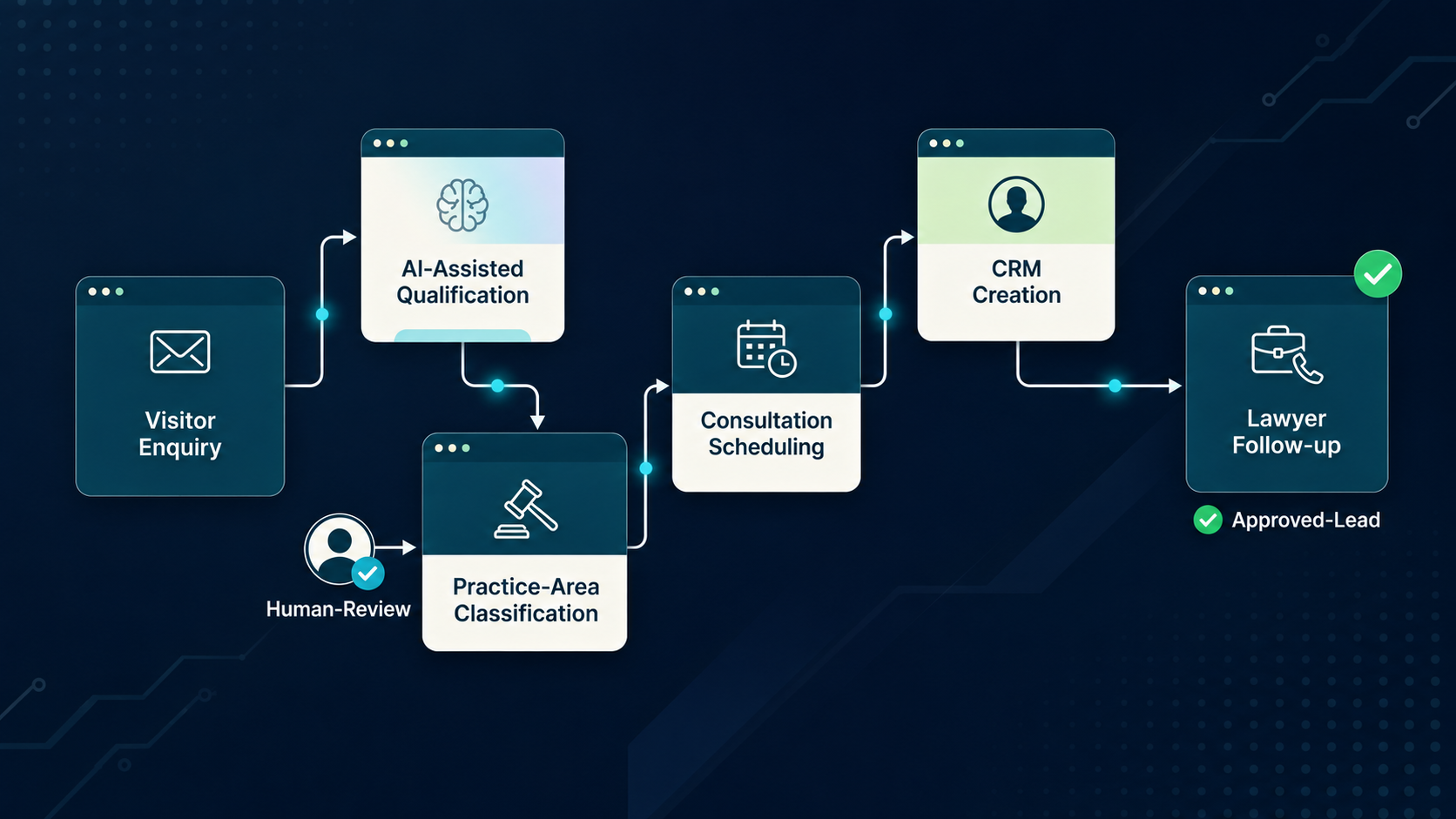
Why employers are hiring for this capability
The legal-AI market is creating roles that combine domain expertise with technology, implementation, governance or product work. The exact title varies by employer, so this page treats current postings as evidence of recurring responsibilities and skills rather than as a universal definition of the role.
For Legal AI Implementation Consultant, the strongest signal is the combination of readiness assessment, workflow mapping, vendor evaluation, pilot design. That combination matters because legal AI projects rarely succeed through model capability alone: the work must fit a legal workflow, use appropriate data, be reviewable by professionals and be adopted by the people responsible for the outcome.
Microsoft
AI transformation and adoption leadership role
Current signal: AI transformation, adoption, organizational change, governance, operating models.
View employer source (checked 19 August 2026)
Microsoft
Corporate, External, and Legal Affairs careers / AI-legal technical role signal
Current signal: legal technology, legal operations, CRM/matter management, data/reporting, production support.
View employer source (checked 19 August 2026)
HubSpot
Legal AI solution design / agentic workflow role
Current signal: AI solution design, agentic workflows, AI agents, SaaS implementation, Claude.
View employer source (checked 19 August 2026)
Harvey
Legal Engineer - Product Specialist
Current signal: top-tier legal practice, AI adoption, post-sales strategy, customer success, workflow integration.
View employer source (checked 19 August 2026)
Distinguish Legal AI Implementation Consultant from adjacent legal AI careers
Primary decision: Turn a legal team's AI readiness into an approved deployment plan with adoption and risk controls. This is a proposed way to read a role description based on the responsibilities outlined above; it does not assert that every employer uses the title in the same way.
Mandate and evidence checklist
- Ownership to clarify: Clarify who selects vendors, manages rollout and owns adoption checkpoints.
- Work product to request: Implementation roadmap covering workflow priority, configuration, training, owner sign-off and measurement.
- Failure mode to test: A pilot ends with a demo but no change management, review policy or operational owner.
Illustrative portfolio or interview exercise
Design a six-week fictional pilot plan with stop conditions, acceptance tests and post-pilot handover. A convincing submission would show the input assumptions, observable decisions, the evidence used to judge the output and the conditions that should cause a human reviewer to intervene. This is an exercise for evaluating capability, not a description of an open job.
Boundary with a related career
Implementation consulting concentrates on delivery after a solution choice; solutions consulting may start at problem diagnosis and option selection. Compare the responsibilities here with the Legal Ai Solutions Consultant guide before treating the titles as interchangeable. Distinguish hiring signals from verified vacancies; individual postings should be checked with the employer before applying.
Typical employers and teams
Potential employers include legal-AI companies, law firms, corporate legal departments, legal-operations teams, technology companies, consulting firms and regulated enterprises building internal AI capabilities. The reporting line may sit in legal, product, engineering, innovation, legal operations, privacy, risk or professional-services teams.
When comparing vacancies, look beyond the title. A role called “legal engineer” may be customer-facing and adoption-led at one company, while another employer may expect deeper technical implementation. Read the responsibilities, tools, decision rights and stakeholders before deciding whether the role matches your profile.
Core skills employers are signaling
The current source set points to the following capability cluster. Candidates should be able to explain not only that they know the term, but where it fits in an end-to-end legal workflow and how they would test whether it is working.
- readiness assessment — connect the skill to a concrete legal use case, control or implementation decision.
- workflow mapping — connect the skill to a concrete legal use case, control or implementation decision.
- vendor evaluation — connect the skill to a concrete legal use case, control or implementation decision.
- pilot design — connect the skill to a concrete legal use case, control or implementation decision.
- governance — connect the skill to a concrete legal use case, control or implementation decision.
- change management — connect the skill to a concrete legal use case, control or implementation decision.
- training — connect the skill to a concrete legal use case, control or implementation decision.
- KPI design — connect the skill to a concrete legal use case, control or implementation decision.
- stakeholder management — connect the skill to a concrete legal use case, control or implementation decision.
Technical depth should be proportionate to the role. A product counsel does not need the same engineering depth as an AI engineer, while a legal engineer who cannot understand lawyer review requirements may also struggle. The strongest candidates develop a T-shaped profile: deep competence in their home discipline plus enough adjacent knowledge to collaborate effectively.
Tools and platforms worth understanding
Employers change their stacks, so candidates should focus on tool categories and transferable concepts rather than memorizing one platform. Current postings nevertheless provide useful signals about the practical environment in which these roles operate.
- workflow mapping
- vendor scorecards
- AI evaluation tools
- project management
- change-management plans
- training systems
- KPI dashboards
- governance checklists
Build enough hands-on familiarity to discuss configuration, data, permissions, limitations and user behavior. You do not need to claim expert-level mastery of every tool; demonstrable understanding of how the pieces connect is more credible.
Portfolio projects to prove competence
A portfolio is especially useful when the role is new enough that candidates may not have held the exact title before. Good projects should show how you frame a legal problem, design a workflow, use AI or technology appropriately, preserve human control and measure the result.
- Legal Ai Readiness Assessment — build a small, reviewable artifact that shows both the technical or operational method and the legal-workflow decision it supports.
- Vendor Scorecard — build a small, reviewable artifact that shows both the technical or operational method and the legal-workflow decision it supports.
- Pilot Plan — build a small, reviewable artifact that shows both the technical or operational method and the legal-workflow decision it supports.
- Implementation Roadmap — build a small, reviewable artifact that shows both the technical or operational method and the legal-workflow decision it supports.
- Change-Management Plan — build a small, reviewable artifact that shows both the technical or operational method and the legal-workflow decision it supports.
- Ai Kpi Dashboard — build a small, reviewable artifact that shows both the technical or operational method and the legal-workflow decision it supports.
For each project, document the problem, assumptions, workflow, data, controls, test cases, failure modes and what you would change before production. This makes a simple prototype more valuable than a polished demo with no evidence of decision quality.
Beginner → intermediate → advanced project ladder
Beginner: choose one of the portfolio ideas and create a written workflow map, requirements list and sample outputs using public or synthetic information.
Intermediate: implement a working prototype or structured operating artifact, add test cases, document failure modes and create a simple evaluation rubric.
Advanced: connect the workflow to multiple systems or stakeholders, add permissions and governance, test edge cases, measure review effort and produce an executive recommendation on whether to deploy, redesign or stop.
How to transition into this career
Legal operations professionals, innovation lawyers, implementation consultants and legal-tech specialists can transition by proving they can manage a complete workflow change from requirements through pilot, governance, adoption and measurement.
The transition is easier when your CV tells a coherent story. Instead of listing unrelated AI courses, show a progression from your existing expertise into specific legal-AI problems: research, contracts, intake, knowledge, governance, implementation, product counseling or operations.
Interview topics and sample questions
Expect interviews to test judgment and translation ability as much as terminology. Prepare to discuss a real workflow, a difficult failure mode, a stakeholder conflict and how you would measure whether the AI-enabled process is better.
- How would you choose the first workflow for a legal AI pilot?
- What evidence should determine whether a pilot scales?
- How would you manage governance without slowing the project unnecessarily?
Strong answers distinguish facts from assumptions, identify where specialist advice is needed, and explain how the candidate would gather evidence before scaling a solution.
CV, resume and LinkedIn keywords
Use keywords only where they accurately describe your experience or demonstrable projects. Relevant terms for this role include: legal AI implementation consultant, legal AI implementation jobs, legal AI consultant skills, AI implementation consultant legal, legal AI consulting career, readiness assessment, workflow mapping, vendor evaluation, pilot design, governance, change management, training, KPI design.
On LinkedIn, connect the keywords to outcomes or artifacts rather than adding them as an undifferentiated skills list. For example, “designed a human-reviewed legal intake automation prototype” is stronger than simply listing “AI agents.”
Practitioner perspective — Dr. Rahul Dev
For this role, I would start with the legal workflow rather than the AI model. Map the trigger, inputs, source authority, decision points, human review, exceptions and output. Only then decide where deterministic automation is enough, where AI adds value, and which evidence is needed before the workflow can be trusted in real use.
That approach makes career preparation more practical because the same framework can be used to build portfolio projects, answer interview questions and evaluate tools. It also mirrors how organizations should approach legal-AI implementation: the technology is one component of an operating system that includes people, data, controls and measurement.
Hiring this role — or need the capability now?
Hire internally when the capability is continuous, embedded and needs long-term ownership inside the legal or product organization.
Use a specialist consultant when the immediate need is to establish strategy, governance, workflow design, vendor selection, a pilot or implementation capability before creating a permanent team.
Use a technology vendor when requirements are already well defined and the primary need is product capability rather than independent workflow, governance or implementation advice.
Organizations evaluating this capability can continue to TechCorpLegal's related consulting and research framework or discuss a legal AI project.
Related legal AI careers
Current job-search sources and methodology
The employer links on this page were checked on 19 August 2026. Job postings can close or change at any time. They are included to identify current skill and responsibility signals, not to promise that a vacancy remains open or to imply that TechCorpLegal acts as a recruiter.
Need this capability for a legal AI project?
Start with the workflow, objective, current systems, governance constraints and the decision that needs to be made.
Information notice: This career guide is for informational and research purposes only. Hiring requirements, role titles, compensation and job availability vary by employer, location and date. It is not employment, legal or recruitment advice.