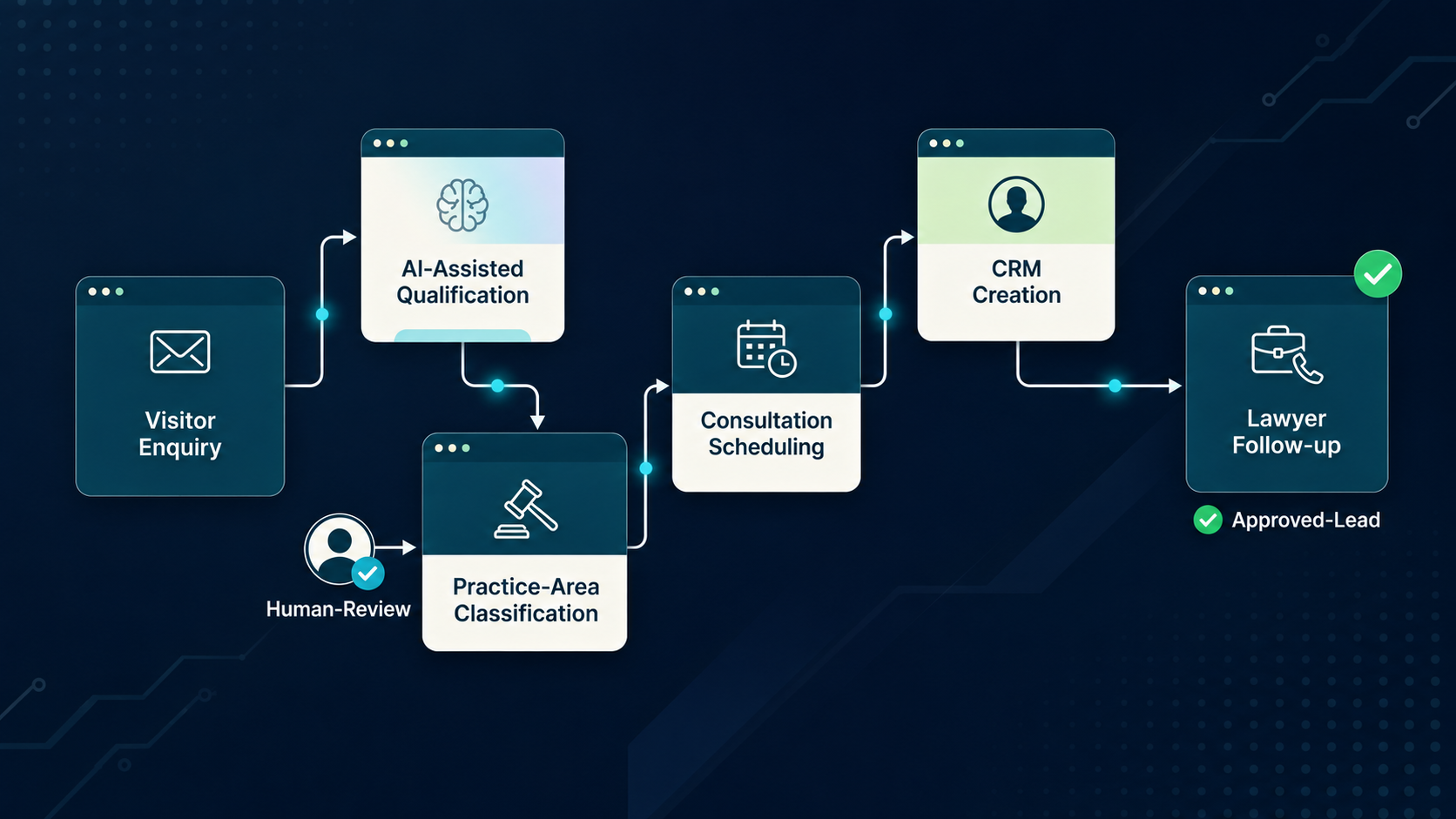
Why this capability appears in current hiring
The strongest signal is not the title alone but the combination of responsibilities employers are assigning around legal AI. Current sources associated with this career emphasize solution design, requirements discovery, APIs, RAG, agents. These capabilities sit at the boundary between legal-domain expertise and AI-enabled delivery.
Employers use different titles for overlapping work. This page therefore uses current postings as evidence of skill and responsibility patterns, not as a claim that every organization defines the role identically.
DLA Piper
AI Solutions Engineer
Hiring signal: problem shaping, prioritized backlogs, user stories, AI workflow delivery, reusable engineering patterns.
Employer/source page (checked 20 August 2026)
NTT DATA
Principal Agentic AI Engineer / Hands-on Technical Lead
Hiring signal: agentic AI, MCP, tool calling, context engineering, RAG.
Employer/source page (checked 20 August 2026)
Harvey
Applied Legal Researcher
Hiring signal: legal subject-matter expertise, AI research, prompt engineering, fine tuning, benchmarks.
Employer/source page (checked 20 August 2026)
Distinguish Legal AI Solutions Engineer from adjacent legal AI careers
Primary decision: Translate agreed legal requirements into a working integration across vendor, data and user systems. This is a proposed way to read a role description based on the responsibilities outlined above; it does not assert that every employer uses the title in the same way.
Mandate and evidence checklist
- Ownership to clarify: Clarify who diagnoses integration failures outside the retrieval layer.
- Work product to request: Proof-of-concept with integration map, permissions, source tracing and acceptance tests.
- Failure mode to test: A custom connector succeeds technically but fails the lawyer's review and evidence requirements.
Illustrative portfolio or interview exercise
Integrate mock intake data with a retrieval component and show auditable human approvals and failure handling. A convincing submission would show the input assumptions, observable decisions, the evidence used to judge the output and the conditions that should cause a human reviewer to intervene. This is an exercise for evaluating capability, not a description of an open job.
Boundary with a related career
Solutions engineering is responsible for the full working integration; RAG engineering centers on retrieval evidence quality. Compare the responsibilities here with the Legal Ai Rag Engineer guide before treating the titles as interchangeable. Distinguish hiring signals from verified vacancies; individual postings should be checked with the employer before applying.
Typical employers and teams
Potential employers include law firms, legal-AI vendors, legal research and information companies, corporate legal departments, consulting firms and technology organizations building domain-specific AI systems. Depending on the role, the reporting line may sit in product, engineering, legal operations, innovation, knowledge, legal, professional services or research.
When reviewing a vacancy, compare the actual workflow ownership, technical depth, decision rights, stakeholders and expected deliverables. Two employers can use similar titles while expecting very different day-to-day work.
Core skills to build
Candidates should be able to connect each skill to a real legal use case and explain how they would test whether it works. Keyword familiarity alone is weak evidence.
- solution design — demonstrate how this capability connects to a real legal workflow, control or product decision.
- requirements discovery — demonstrate how this capability connects to a real legal workflow, control or product decision.
- APIs — demonstrate how this capability connects to a real legal workflow, control or product decision.
- RAG — demonstrate how this capability connects to a real legal workflow, control or product decision.
- agents — demonstrate how this capability connects to a real legal workflow, control or product decision.
- workflow orchestration — demonstrate how this capability connects to a real legal workflow, control or product decision.
- backlog/user stories — demonstrate how this capability connects to a real legal workflow, control or product decision.
- evaluation — demonstrate how this capability connects to a real legal workflow, control or product decision.
- production delivery — demonstrate how this capability connects to a real legal workflow, control or product decision.
A useful profile is often T-shaped: depth in law, engineering, product, knowledge or operations, plus enough adjacent AI and business fluency to work across disciplines.
Tools and platforms worth understanding
The exact technology stack will vary. Focus on transferable concepts and learn enough about representative tool categories to discuss data flow, permissions, limitations, evaluation and operational fit.
- APIs and webhooks
- RAG frameworks
- LLM orchestration
- vector databases
- workflow automation
- identity and permissions
- evaluation frameworks
- observability and logging
Where a job posting names a specific platform, treat it as an employer-specific signal rather than a universal certification requirement.
Portfolio projects to prove competence
New legal-AI titles create a practical problem: many candidates have the underlying skills but have never held the exact title. A structured portfolio can bridge that gap by showing how you frame problems, test assumptions and communicate findings.
- Legal Ai Solution Architecture — build a reviewable artifact with problem statement, assumptions, workflow, test cases, controls and findings.
- Matter-Intake Agent — build a reviewable artifact with problem statement, assumptions, workflow, test cases, controls and findings.
- Rag Reference Architecture — build a reviewable artifact with problem statement, assumptions, workflow, test cases, controls and findings.
- Integration Requirements Pack — build a reviewable artifact with problem statement, assumptions, workflow, test cases, controls and findings.
- Ai Workflow Backlog — build a reviewable artifact with problem statement, assumptions, workflow, test cases, controls and findings.
- Solution Evaluation Plan — build a reviewable artifact with problem statement, assumptions, workflow, test cases, controls and findings.
Document what failed as carefully as what worked. For AI roles, evidence of evaluation, boundary conditions and redesign decisions is often more persuasive than a demo that appears flawless.
Beginner → intermediate → advanced project ladder
Beginner: map one legal workflow and create a requirements document, sample inputs, expected outputs and a small set of test cases.
Intermediate: build or configure a working prototype, define an evaluation rubric, test edge cases and record failure patterns.
Advanced: connect the workflow to multiple systems or stakeholders, add permissions and governance, measure quality and review effort, and prepare an executive recommendation on whether to deploy, redesign or stop.
How lawyers and technologists can transition
Engineers can move into legal AI by learning legal workflows and the controls needed around authority, confidentiality and human review. Legal-tech professionals can move toward solutions engineering by strengthening API, data, retrieval and integration skills.
The most credible transition story connects your prior expertise to a specific legal-AI problem. Courses can help, but a portfolio showing workflow analysis, testing and decision quality is stronger evidence of readiness.
Interview topics and sample questions
Prepare to discuss trade-offs, failure modes and how you would gather evidence before scaling. Interviewers may be testing whether you can translate between disciplines rather than whether you can repeat AI terminology.
- Sketch an architecture for a legal research assistant using internal and external sources.
- How would you translate an attorney request into technical requirements?
- What would you monitor after deploying an AI workflow?
Good answers make assumptions explicit, distinguish technical limitations from legal or operational constraints, and describe how human review fits into the system.
CV, resume and LinkedIn keywords
Use role keywords only where your experience or projects support them. Relevant terms include legal AI solutions engineer, AI solutions engineer legal, legal AI solutions engineering jobs, legal AI solutions architect, solution design, requirements discovery, APIs, RAG, agents, workflow orchestration, backlog/user stories.
On LinkedIn and a CV, connect keywords to artifacts: “built an evaluation dataset for legal AI responses” is more informative than listing “LLM evaluation” with no context.
How to read current hiring signals
A job posting is a snapshot of one employer's priorities, not a permanent specification for the profession. The useful career signal comes from comparing responsibilities across employers and asking which capabilities recur. Candidates should therefore build transferable evidence: a workflow map, evaluation method, technical prototype, knowledge structure, product decision or governance artifact that can be explained independently of one vendor's stack.
This also reduces the risk of chasing a fashionable title. If the title changes but the underlying work still requires legal-domain judgment, AI literacy, structured testing, cross-functional communication and operational delivery, the portfolio remains relevant. Use the cited sources to understand the market now, then keep checking newer postings as tools and role definitions evolve.
Practitioner perspective — Dr. Rahul Dev
I would approach this career from the workflow outward. First define the legal task, decision, source material, users, exceptions and review responsibility. Then decide which AI method is appropriate and what evidence is needed to trust the resulting workflow.
This creates a useful bridge between career preparation and real implementation. The same discipline that improves a portfolio project—clear assumptions, test cases, controls and measurement—also improves an enterprise AI project.
Hiring this role — or need the capability now?
Hire internally where the capability is continuous, embedded and needs long-term ownership.
Use specialist consulting where the immediate need is strategy, workflow design, governance, vendor selection, pilot design or implementation before a permanent team is established.
Use a technology vendor where requirements are already well defined and the main need is product capability.
Organizations can continue to related TechCorpLegal research and consulting or discuss a legal AI project.
Related legal AI careers
Current job-search sources and methodology
Employer and job-source links were checked on 20 August 2026. Postings may change or close. They are included as evidence of current responsibilities and skill signals, not as a promise that a vacancy remains available.
Need this capability for a legal AI project?
Start with the workflow, objective, systems, data, governance constraints and the decision that needs to be made.
Information notice: This career guide is for informational and research purposes only. Job titles, requirements, compensation and availability vary by employer, location and date. TechCorpLegal is not acting as a recruiter or placement service.