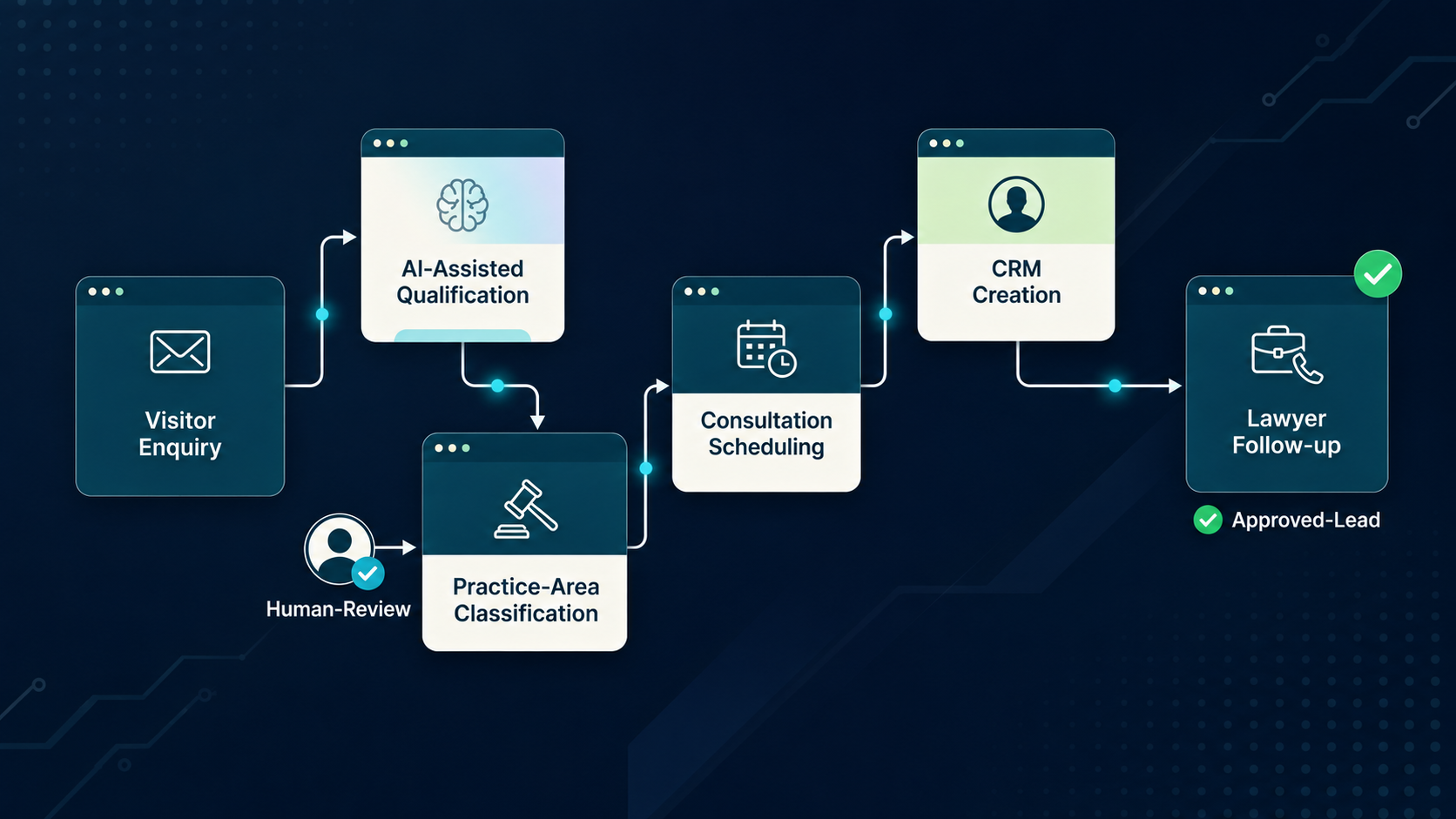
Current hiring signals and what they mean
The current hiring evidence for Legal Automation Specialist does not always appear under one standardized title. The more reliable signal is the recurring capability cluster across employers. For this career, that cluster includes legal workflow mapping, process design, workflow automation, CLM and intake systems, LLM-assisted automation. Those capabilities show that employers are looking for people who can connect AI systems to accountable business processes rather than discuss AI only at a conceptual level.
The postings below were checked on 25 August 2026. They should be treated as time-sensitive examples of current demand, not promises that a vacancy will remain open. The durable value is the responsibility pattern: governance, workflow design, risk analysis, adoption, policy, technical controls or measurable customer outcomes.
Celonis
Intern Legal Operations and Technology
Current signal: Workflow mapping, AI-assisted legal automation, prompt testing, CLM/intake tools and documentation.
View employer source (checked 25 August 2026)
Justworks
Legal Tech and Operations Manager
Current signal: AI fluency, legal operations, systems thinking and durable production workflows.
View employer source (checked 25 August 2026)
Gusto
Legal Operations Partner
Current signal: Legal tooling, AI implementation and agentic/automated legal workflows.
View employer source (checked 25 August 2026)
Distinguish Legal Automation Specialist from adjacent legal AI careers
Primary decision: Select and configure repeatable legal processes with deterministic rules and controlled AI assistance where needed. This is a proposed way to read a role description based on the responsibilities outlined above; it does not assert that every employer uses the title in the same way.
Mandate and evidence checklist
- Ownership to clarify: Check whether the position emphasizes low-code configuration or custom integration design.
- Work product to request: Automation specification describing conditions, templates, escalation and audit logs.
- Failure mode to test: A rules workflow proceeds on invalid input because no exception branch was defined.
Illustrative portfolio or interview exercise
Configure a mock NDA intake decision tree and show test cases for non-standard requests. A convincing submission would show the input assumptions, observable decisions, the evidence used to judge the output and the conditions that should cause a human reviewer to intervene. This is an exercise for evaluating capability, not a description of an open job.
Boundary with a related career
Automation specialists often center on platform configuration; workflow engineers may own broader system orchestration. Compare the responsibilities here with the Legal Ai Workflow Engineer guide before treating the titles as interchangeable. Distinguish hiring signals from verified vacancies; individual postings should be checked with the employer before applying.
Where this role can sit in an organization
A Legal Automation Specialist can appear in technology companies, legal-AI vendors, law firms, corporate legal departments, financial institutions, healthcare companies, regulated enterprises, consulting firms or other organizations adopting AI at scale. The reporting line may be Legal, Privacy, Compliance, Risk, Policy, Security, Legal Operations, Product, Customer Success or a transformation function. This variation is important for candidates: two vacancies with similar titles can differ substantially in technical depth, commercial accountability and authority.
When screening a role, identify who owns the decision, which teams are stakeholders, what evidence the role must produce, and what happens after a recommendation is made. A role that can approve, block or escalate AI use cases is different from one that primarily advises; a customer-facing role with renewal responsibility is different from an internal implementation role.
Core skills employers are signaling
The strongest candidates can explain each skill in terms of a deliverable, decision or measurable workflow. Listing frameworks on a résumé is weaker than showing how they were applied to an intake process, control design, product review, vendor decision, customer adoption plan or audit-ready evidence set.
- Legal Workflow Mapping: be able to explain how legal workflow mapping changes a real decision, control, workflow or stakeholder outcome.
- Process Design: be able to explain how process design changes a real decision, control, workflow or stakeholder outcome.
- Workflow Automation: be able to explain how workflow automation changes a real decision, control, workflow or stakeholder outcome.
- Clm And Intake Systems: be able to explain how CLM and intake systems changes a real decision, control, workflow or stakeholder outcome.
- Llm-Assisted Automation: be able to explain how LLM-assisted automation changes a real decision, control, workflow or stakeholder outcome.
- Prompt Design: be able to explain how prompt design changes a real decision, control, workflow or stakeholder outcome.
- Testing And Quality Assurance: be able to explain how testing and quality assurance changes a real decision, control, workflow or stakeholder outcome.
- Documentation: be able to explain how documentation changes a real decision, control, workflow or stakeholder outcome.
- Change Management: be able to explain how change management changes a real decision, control, workflow or stakeholder outcome.
- Legal Operations Metrics: be able to explain how legal operations metrics changes a real decision, control, workflow or stakeholder outcome.
Portfolio projects that can demonstrate capability
A portfolio does not need confidential client work. It can use a fictional company, public regulation, a synthetic workflow and clearly labeled assumptions. What matters is whether the artifact shows structured reasoning, practical implementation and appropriate limits.
Project 1: Automate contract intake and routing for a sample legal team
Define the business context, inputs, decision logic, risks, human review points, output artifact and success criteria. Include a short note on what the project does not prove.
Project 2: Build a clause-extraction and comparison workflow
Define the business context, inputs, decision logic, risks, human review points, output artifact and success criteria. Include a short note on what the project does not prove.
Project 3: Create a legal request triage workflow with human escalation
Define the business context, inputs, decision logic, risks, human review points, output artifact and success criteria. Include a short note on what the project does not prove.
Project 4: Design an approval matrix for automated contract processes
Define the business context, inputs, decision logic, risks, human review points, output artifact and success criteria. Include a short note on what the project does not prove.
Project 5: Prototype an AI-assisted playbook lookup tool
Define the business context, inputs, decision logic, risks, human review points, output artifact and success criteria. Include a short note on what the project does not prove.
Project 6: Build a workflow QA and exception log
Define the business context, inputs, decision logic, risks, human review points, output artifact and success criteria. Include a short note on what the project does not prove.
Project 7: Create an automation ROI and cycle-time dashboard
Define the business context, inputs, decision logic, risks, human review points, output artifact and success criteria. Include a short note on what the project does not prove.
Project 8: Document a production-ready legal automation handoff guide
Define the business context, inputs, decision logic, risks, human review points, output artifact and success criteria. Include a short note on what the project does not prove.
Beginner → intermediate → advanced project ladder
Beginner
Start with one documented workflow or policy artifact. Use public materials and show that you can structure the problem, identify stakeholders and produce a usable output.
Intermediate
Add risk scoring, control mapping, metrics, testing or a repeatable operating process. Show how the artifact would be maintained when rules, models, vendors or user behavior change.
Advanced
Build an end-to-end operating model: intake, assessment, approval, implementation, monitoring, exception handling and reporting. Add a short executive briefing that explains trade-offs and residual risk.
How to transition into this role
Legal operations, paralegal, contract management, business analysis, no-code automation and legal-tech professionals can transition by showing reliable workflows rather than isolated prompt demos.
The transition is strongest when you can translate prior experience into the language of the target role. A lawyer may already have risk analysis and stakeholder skills; a technologist may already understand systems and testing; a compliance professional may already know controls and evidence. The portfolio should fill the missing bridge rather than pretending the prior experience is identical.
Interview topics to prepare
- How would you define the purpose and boundaries of a Legal Automation Specialist role?
- How would you assess a new generative-AI or agentic-AI use case before launch?
- What evidence would you require before recommending approval?
- How do you translate legal, policy or risk requirements into something a technical or business team can implement?
- How would you handle disagreement between speed-to-market and governance requirements?
- What metrics would show that your program or customer outcome is actually working?
- How do you keep a governance or implementation process current when models, vendors and regulation change quickly?
- Describe a situation in which human review should remain mandatory even if an AI system performs well.
Strong interview answers make the decision process visible. State assumptions, identify stakeholders, separate legal requirements from policy choices, describe evidence, define escalation paths and acknowledge uncertainty. Avoid presenting one framework or tool as a universal answer.
CV and LinkedIn keywords
Use only terms that accurately describe work you have performed. Relevant language for this role can include: legal workflow mapping, process design, workflow automation, CLM and intake systems, LLM-assisted automation, prompt design, testing and quality assurance, documentation, change management, legal operations metrics, AI governance, generative AI, agentic AI, human oversight, risk assessment, implementation, stakeholder management and measurable outcomes.
Evidence is more persuasive than keyword density. A bullet such as “designed an AI vendor intake workflow with risk tiers, evidence requirements and escalation paths” communicates more than a list of frameworks without context.
Practitioner Perspective — Dr. Rahul Dev
Dr. Rahul Dev works at the intersection of law, AI, data science, legal operations and technology implementation. For career development, the practical advantage is to build evidence that you can connect legal or business requirements with technology and execution. A portfolio should therefore show decisions, controls, workflows and measurable outcomes—not only commentary about AI.
Candidates should also distinguish between knowing an AI framework and operating a program. Employers increasingly need people who can move from an abstract requirement to an intake form, assessment, approval path, technical control, implementation plan, training process, metric or executive decision. That operational bridge is where legal, risk and technology backgrounds can become unusually valuable.
Hiring this role — or need the capability now?
Organizations do not always need a permanent hire immediately. The decision can be framed as hire, consultant or vendor. Hire when the capability is continuous, organization-specific and requires durable ownership. Use a consultant when the priority is operating-model design, assessment, implementation, policy creation or an initial roadmap. Use a vendor when the requirement is primarily a repeatable technology capability that can be bought and governed.
Related TechCorpLegal guidance: AI governance, legal AI implementation, legal operations automation, and legal AI consulting.
Current employer sources
These sources were checked on 25 August 2026. Job postings can be changed or removed at any time. They are cited as current hiring signals for responsibilities and skills, not as guarantees of availability.
- Celonis — Intern Legal Operations and Technology. Signal used: Workflow mapping, AI-assisted legal automation, prompt testing, CLM/intake tools and documentation.
- Justworks — Legal Tech and Operations Manager. Signal used: AI fluency, legal operations, systems thinking and durable production workflows.
- Gusto — Legal Operations Partner. Signal used: Legal tooling, AI implementation and agentic/automated legal workflows.
Explore related careers

Research lead for TechCorpLegal career intelligence at the intersection of law, AI, data science, legal operations and technology implementation.
Building or hiring for Legal Automation Specialist capability?
Use the career framework to define the role, portfolio evidence, internal capability gaps and the implementation path.