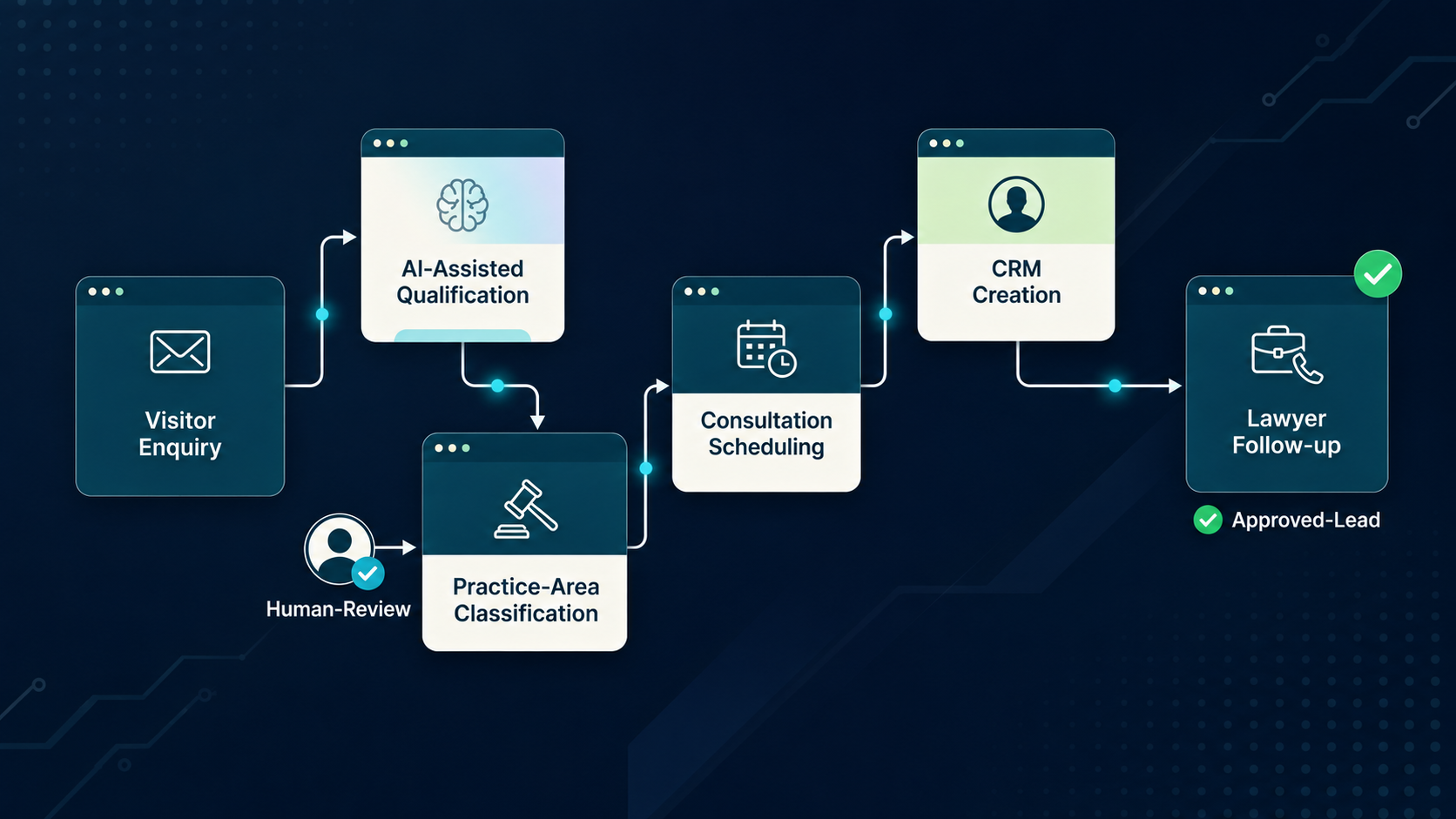
AI can support legal operations across service delivery, intake, contracts, knowledge, research, compliance support, reporting and matter operations when it is integrated into defined workflows with appropriate human review.
AI can support multiple legal-operations capabilities
Potential areas include intake, contracts, knowledge, research, compliance support, reporting, matter operations and service delivery.
Use legal operations to connect technology to process
Legal ops can define workflows, data, systems, owners, metrics and change-management mechanisms that make AI operational.
Design for service delivery
The question should be how the legal function serves internal clients better, not how many AI features it deploys.
Maintain controls around legal judgment
Automation can assist classification, retrieval, extraction and routing while judgment-heavy decisions retain appropriate human review.
Build a measurement loop
Use service, quality, adoption and economic metrics to identify what should be expanded or redesigned.
Limitations and decision guidance
- AI for legal operations is not synonymous with full automation.
- Use cases vary significantly by organization size and operating model.
- Professional and regulatory duties remain context-specific.
Frequently asked questions
What does AI for legal operations mean?
Using AI within defined legal service-delivery workflows, supported by process design, data, systems, governance and measurement.
What role does legal ops play?
It connects business need, workflow, technology, metrics and change management.
Which workflows are common candidates?
Intake, contracts, knowledge, research, compliance support and reporting.
Decision framework and implementation research
Task Decomposition
A useful analysis of AI for Legal Operations starts with task decomposition. The team should define what is being decided, who owns the decision, what evidence is available and which assumptions remain untested. This prevents a broad technology objective from becoming an implementation commitment before the underlying workflow, risk and operating constraints are understood. The output should be a documented decision record that can be revisited when the use case, vendor, model, data source or legal environment changes.
Model Suitability
The second control point is model suitability. Legal AI work often fails when a technical capability is evaluated in isolation from the surrounding process. The relevant question is not simply whether a model can perform a task, but whether the organization can govern the inputs, review the outputs, route exceptions and maintain accountability. Evidence should therefore include workflow observations, user requirements, security and data constraints, and the human steps that remain authoritative.
Knowledge Grounding
For knowledge grounding, teams should distinguish a demonstration from production evidence. A successful demo may show that a task is technically possible, but production suitability depends on repeatability, error handling, integration, data treatment, access controls and the cost of supervision. A useful review records both positive evidence and failure conditions, because limitations often determine whether the use case should be deployed, narrowed, redesigned or deferred.
Human Review
human review should also be evaluated across the full operating lifecycle. Initial configuration is only one stage. Organizations need a position on ownership after launch, change approval, documentation, user support, monitoring, incidents, vendor changes and retirement. This lifecycle view reduces the risk of creating a one-off pilot that cannot be governed once it becomes embedded in everyday legal work.
Logging And Monitoring
A practical decision framework for logging and monitoring should use explicit criteria rather than a single headline metric. Quality, risk, speed, user effort, control effectiveness and implementation burden may all matter, but their weight depends on the workflow. High-volume low-consequence tasks can justify a different review model from advice, filings, investigations or other work where an error can materially affect rights, obligations or strategy.
Fallback Processes
Finally, fallback processes needs an evidence and review loop. The organization should define what will be measured, how exceptions will be captured, who can pause or change the workflow and when the decision must be reconsidered. This turns AI for Legal Operations from a static technology choice into a governed operating decision. The framework should remain proportionate: additional controls are valuable only when they address a real risk, dependency or accountability requirement.
Implementation note: The appropriate approach depends on the organization, workflow, data, risk tolerance and applicable law. A pilot or assessment should therefore be designed to produce evidence for a specific decision rather than to validate AI adoption in the abstract.
Evidence and sources
Sources are listed for transparency. Time-sensitive legal, regulatory and vendor statements must be rechecked immediately before publication or reliance.
- S10 — CLOC: 2026 State of the Industry / Legal Operations research. Official/source page (accessed 2026-08-10)
- S11 — Association of Corporate Counsel: Artificial Intelligence Toolkit for In-house Lawyers, Second Edition (2026). Official/source page (accessed 2026-08-10)
Related TechCorpLegal resources

PhD Data Scientist, Technology Law & Patent Attorney, and AI Educator with 20+ years advising global CEOs and CXOs on technology, business and legal innovation.
Need help applying this framework to your legal function?
Use the research framework to identify your current position, then discuss the workflow, governance, vendor or implementation questions that require deeper analysis.
Discuss This with TechCorpLegalOperational evidence before scale
Before an automated legal workflow is scaled, the team should review a representative sample of real work, document the exceptions that required human intervention and confirm that ownership remains clear when the system cannot complete the task. The review should also test whether the workflow creates usable records for audit, quality review and later improvement. This evidence is more useful than a broad automation claim because it shows how the process behaves under normal conditions and at the points where judgment, escalation or additional information is required.